Who Runs Adam Silver's NBA?

(ORIGINALLY PUBLISHED ON MICHAEL SULLIVAN'S SUBSTACK, SULLY'S WEEKLY)
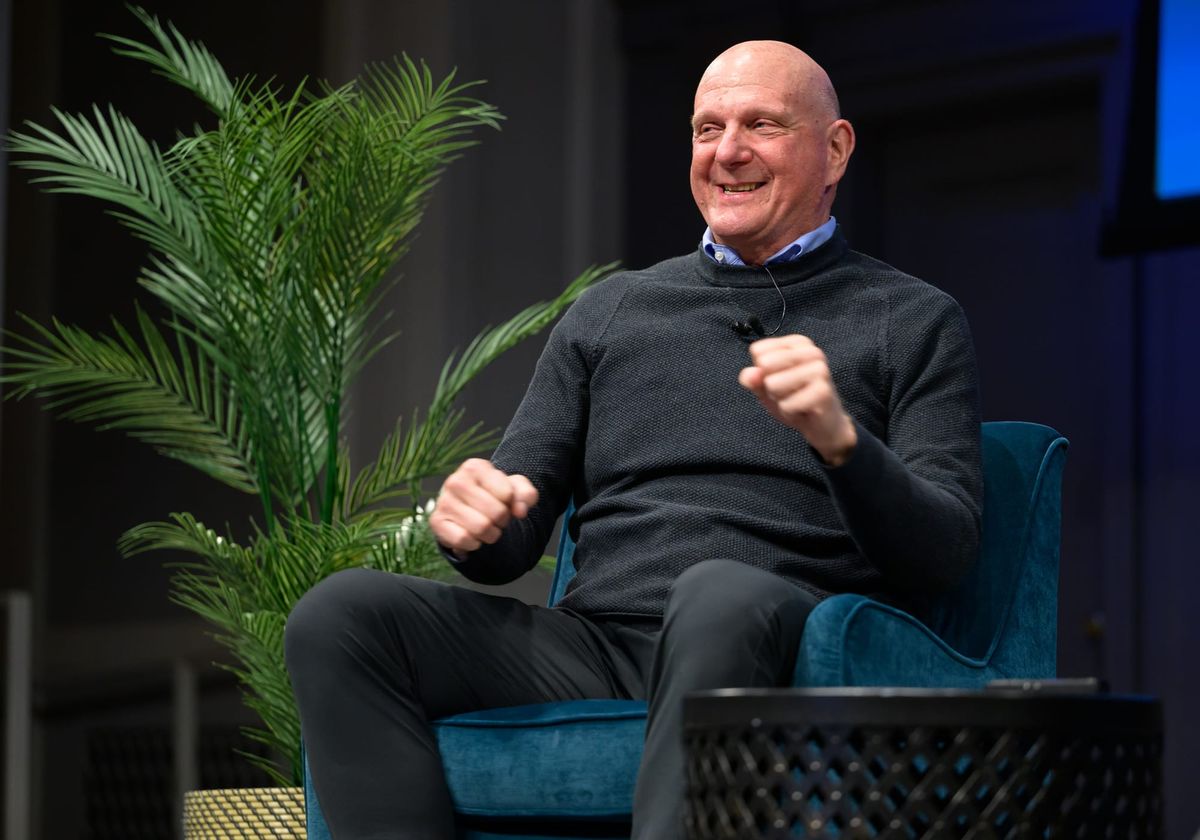
Steve Ballmer has broken the cardinal rule of a just society. He’s hoarded wealth more egregiously than any human should ever have the chance to, and, like other billionaires, he has been lauded instead of disciplined. Rather than repercussions, he’s ascended to riches that most humans cannot conceive of, now sitting on a fortune of around 150 billion dollars.
Because of this, I’m almost sympathetic to Ballmer for not thinking that circumventing the salary cap in the NBA – which commissioner Adam Silver called the “cardinal sin” of the league, and which Ballmer almost certainly did – would lead to any negative fallout.
If you’re unaware of the circumstances, journalist Pablo Torre originally reported in September on Los Angeles Clippers’ star Kawhi Leonard’s endorsement deal with the now-defunct (and fraudulent) company Aspiration, a deal that appears to have acted as a workaround by the Clippers (and Ballmer, the team owner) to the NBA’s salary cap, which limits how much money a team can spend on player contracts each year. That’s a no-no.
Granted, paying Kawhi Leonard nearly $50 million under the table is far from the least ethical financial workaround Steve Ballmer has ever orchestrated, so why should he think this, of all things, would become a stain on his mostly sweat-free reputation? He didn’t know! In the words of the inimitable George Costanza, if anyone told Steve Ballmer he can’t do this, I’m sure he would have refrained. “Was that wrong?”
I (mostly) jest, of course. Ballmer, like all ultra-wealthy individuals, has never played by the rules, has never been handcuffed by the problem of what is morally right, has never been punished for that. Thus, it’s hard to blame him for thinking any serious discipline would come from his likely skirting of NBA rules.
I am honest when I say, though, that it’s hard to blame Ballmer for thinking this way because he might be right.
Rumors of how Silver will, or will not, punish Ballmer and the Clippers for this historic rule-breaking have been flying since the news broke. While nothing is certain (this investigation will likely be tediously long, an intentional move by the NBA in hopes the public moves on), a lenient outcome is the likely one.
What Silver decides to do will tell us a lot about himself, and the NBA. For Silver, it will tell us just how he views himself in relation to Ballmer and the other owners. A slap on the wrist will show us, plainly, that Silver thinks of himself not as a boss figure to NBA owners, but as subservient to them and their money. Silver has never been one to ruffle the feathers of the owners, the power players who he believes to be the most important figures in the league; in Silver’s mind, satisfying the owners comes first, and everyone else involved in the operation is secondary. He’s a company man through and through, and the success of his company, like many other facets of our lives, is dictated by the satisfaction of those who write the checks.
It will also show us just how closely the NBA reflects the world at large. How brazen can the powerful be in their disregard of steel-clad guidelines? How careless can they be in their commitment to supposed “cardinal” rules?
A lot of folks are asking how Steve Ballmer could be so indifferent in his disregard of the NBA salary cap. My question is… With how the rest of his life has gone, why would he not be?
I don’t think Steve Ballmer considered the repercussions because I don’t think Steve Ballmer knows that repercussions exist. For him, they never have. And with Adam Silver’s allegiance pledged to money and money alone, I’m not getting my hopes up that he’s willing to be the one who introduces a billionaire to the idea of chastisement.
Meanwhile, Portland Trail Blazers head coach Chauncey Billups and Miami Heat player Terry Rozier are currently under investigation by the FBI for their parts in an illegal gambling ring. Rozier is alleged to have been a part of an illegal sports betting scheme in which he (and potentially other players) removed themselves from games to help betters, according to the FBI, an organization that should never be taken at face value, but I suppose that’s a piece for another day.
Adam Silver now has numerous controversies to clear up, and the throughline between each of them is clear: Greed.
Ballmer, one of the richest men on Earth, got greedy and refused to let the NBA’s rules stop him from making a move that he thought would bring his basketball team more success, and in turn, bring him more wealth.
Chauncey Billups and Terry Rozier, two people far less rich than Steve Ballmer but far richer than the average American, showed greed in a different way. A more confusing way, I believe.

Both of these men worked extremely hard to be in the positions they were in; not only that, but they were acutely aware (as I must assume everyone in the NBA is) of how quickly it could slip away. One bad season for either of them, and their grip on the roles as player and coach in the NBA suddenly become tenuous. Unlike Ballmer, whose “job” as an owner is in the hands of him alone, Billups and Rozier remain employees who must perform well to keep their jobs. They had everything to lose — and still risked it all.
Hierarchies of power still exist in the NBA. Despite their own somewhat nauseating wealth, coaches exist near the bottom of it. Players, although they (theoretically) report to coaches, exist one rung up because of the power they wield as the actual faces of the league. Owners, often faceless and nondescript in the public eye, hold the most power out of anyone.
In the next few months, Adam Silver is going to answer a lot of important questions, but one stands out among the rest. How will Ballmer be held accountable? How will Billups and Rozier be?
In Adam Silver’s NBA, who gets to be greedy?