Kevin Durant is Watching You

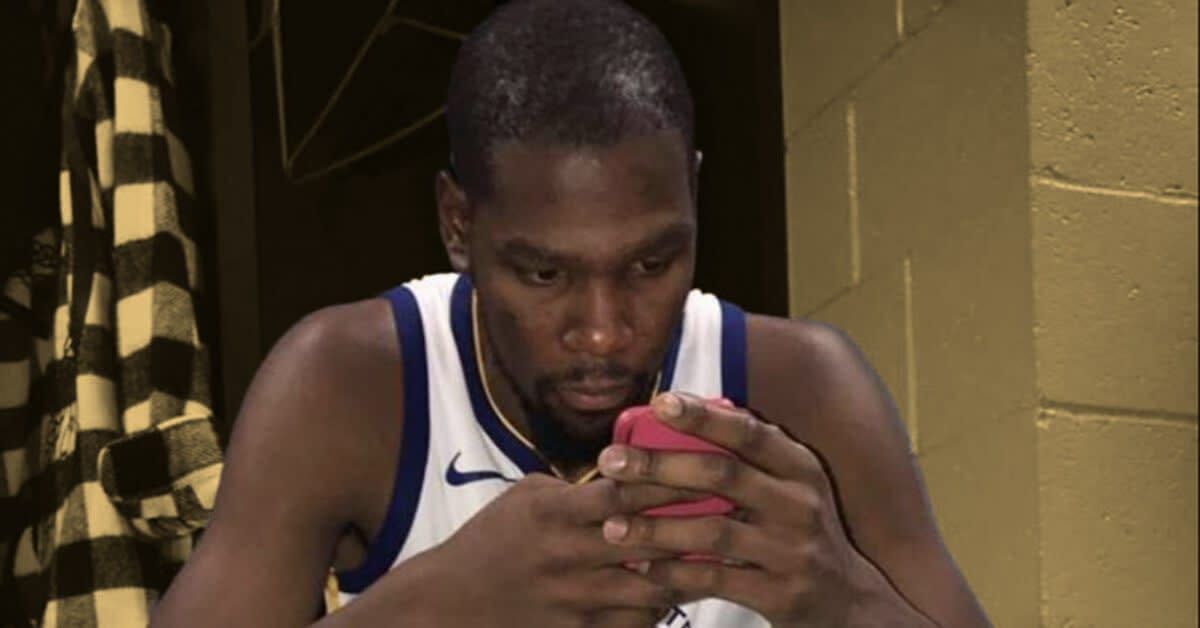
Kevin Durant invests in a drone company that helps commit war crimes. Caitlin Clark is the new face of pharma giant Eli Lilly. And LeBron James is Gwangi.
In 2025, everything is a brand deal. I don’t like it, but I understand it, and I don’t (fully) fault public figures for being brand ambassadors, especially if their regular employers — cough, WNBA — pay them scraps.
But with multiple hoops mega-celebrities attaching their names to companies that are responsible for startlingly unethical actions, we have zoomed past the line of the ethical brand deal (perhaps an oxymoron itself) and straight into a propaganda parade for the most wicked companies in the world.
It’s not not bleak.
How Tall Is Kevin Durant?
It doesn’t matter because he can watch you from the sky now. Well, not exactly. But kind of.
There’s a profile from a 2019 edition of ESPN: The Magazine, titled, “Kevin Durant: The Making of a Mogul.” The piece fawns over Durant’s business ventures, how he hangs out with Oprah and Jack Dorsey in places you could never even dream of being, and how particular he and his associates are when deciding what companies to invest in.
The piece delves into some specific investments Durant has made, saying he and his business team, at that point, had, “…Invested in some 50 companies, ranging from the cold-pressed juice company WTRMLN WTR to an autonomous drone company called Skydio.”
As far as I know, that’s the first public mention of Durant’s investment in Skydio. It was as innocuous as possible; almost a throwaway line, used more as a subtle flex of Durant’s business acumen than anything else. You’d be forgiven for thinking Skydio was a company that merely sold drones to regular people who want to take pictures of wind turbines.
In fact, Skydio was that company, until it realized that there’s more money to be made in genocide and war-mongering. Thus, that’s the route it took, inking multi-million dollar contracts with the U.S Army and Air Force in 2019, and a few years later, the Israeli Defense Forces.
From a November 2023 piece in Politico, soon after Hamas’ October 7th attack in Gaza, “In the three weeks since the attack, Skydio has sent more than 100 drones to the Israeli Defense Forces, with more to come, according to Mark Valentine, the Skydio executive in charge of government contracts….”
The company, which is based just south of San Francisco, does most of its business with militaries; the United States chief among them.
But recently, Skydio has expanded its reach from assisting genocide to watching over the domestic battlefield (said with the largest eyeroll you can possibly imagine) by teaming with over 800 police departments across the United States, according to Nate Bear, who did some great and terrifying reporting on this for the Substack, ¡Do Not Panic!
The police department in my city, Philadelphia, is among that expansive list. A piece from the Philly Inquirer this summer covered something called the Teen Tech Summit, in which a Skydio program manager, “…said the department currently uses drones that are controlled by hand for events like protests and sporting events.
Wow, so I can attend a Sixers vs. Rockets game in Philly and be watched via drone by the Philadelphia Police Department thanks to a company funded in part by one of the players on the court! It’s the most dismal full-circle moment ever! Living in a militarized police state is awesome, right everyone? Right? (Say yes, they’re watching us all right now).
It doesn’t appear that Durant has ever publicly acknowledged his investment in Skydio. That’s saying something, considering the massive presence the Houston Rockets star has on social media, where he enjoys trolling fans and getting into discussions about seemingly everything except drone warfare.
No, I don’t expect every athlete to only strike deals with, and invest in, highly ethical organizations. That’s not realistic. But there’s a chasm between a run-of-the-mill brand deal with, say, a fast food restaurant, and an investment into a company actively lending its services to a genocide.
Maybe you want to make the argument that Durant, like other athletes, invests in a ton of companies without knowing the specifics of what those companies do. But giving Durant the benefit of the doubt gets tough when you consider that ESPN specifically mentioned Skydio in Durant’s profile in 2019, and that the author of the piece, Ramona Shelburne, also wrote, “Durant says he likes to study the industry and how a company has grown from its early stages of development before he invests.”
Ah. So the US military contracts were a positive, then, Kevin?
Distancing yourself from a brand deal, partnership, or investment is not hard. Durant’s refusal to do that says plenty — and the relative lack of backlash perfectly represents how the public sees all athlete investments and brand deals as the same in 2025, even though they’re very much not.
I love watching Kevin Durant play basketball. But he deserves scrutiny like any other person who invests their money, not-so-indirectly, to Israel’s genocide in Gaza and the United States’ continued effort to police its own civilians. His day job is irrelevant here.
Change The Font And They’ll Forget The Felonies
Recently, I watched a short film called "Caitlin Clark Goes Back to School,” in which Clark is interviewed by young kids, and the Indiana Fever star enthusiastically encourages them to eat vegetables, stay active, etc.
The film looked great — lighting was on point, audio was high-quality, and Clark was as personable and charming as ever. It barely felt like an ad, save for the '“Caitlin Clark and Lilly are helping kids get healthy,” text at the beginning, and the, “Lilly: A Medicine Company” title card at the end.
If you’re unfamiliar with said medicine company, that’s by design. Lilly — formerly known as Eli Lilly — has undergone a serious brand overhaul in recent years, likely in hopes to distance itself from a “Legal troubles” section on their Wikipedia that’s long enough to be mistaken for a Russian novel.
Seriously, when a company’s sexual harassment lawsuit is buried between its controversies about bovine growth hormone and manipulation of insulin pricing, it’s fair to question whether said brand is particularly moral.
(Eli Lilly, you may remember, was the company that had to publicly say that insulin is actually not free after a fake Twitter account posing as Eli Lilly posted, “We are excited to announced insulin is free now,” in one of the best moments in the history of that site.)
This partnership is not confusing from a business perspective — Eli Lilly is based in Indianapolis, where Clark plays for the Indiana Fever. And with Lilly leaning into marketing itself as a health-forward “medicine company,” it only makes sense to recruit a professional athlete to be the mouthpiece for the brand’s new era.
Plus, it’s hard to push back against any of the messages in this specific ad. Yes, of course kids should eat more vegetables, stay active, play sports, etc.
But a slick new marketing campaign, and an attempt at marketing itself as a “medicine company,” as opposed to what Lilly really is — an obscenely profitable, hauntingly evil pharmaceutical company — is a pretty clear effort to change public perception without changing anything about how the company actually operates. And telling kids to be healthy is the easiest way to get people on your side.
I’m not mad at Caitlin Clark for massive brand deals. Like I said, the WNBA pays her well under $100,000 per year. And it’s not just her that deserves reproach here. The Indiana Fever, Clark’s team, have Lilly as their main sponsor and a “Lilly” patch on their uniforms.
We’ve all been forced to advertise or sell something for our employer, right? It sucks! But there’s a big difference between being forced to represent something for the company you work for and going out on your own and telling everyone how great it is. Clark is doing the latter.
The claim that Clark and Lilly are interested in making people healthier becomes slightly ironic when you look at basically everything this company has ever done.
“Lilly had been accused of persuading doctors to prescribe Zyprexa to children and the elderly, despite the fact that the drug wasn’t FDA-approved for those patient groups--and the knowledge that it was particularly risky for them to take,” according to Fierce Pharma in 2009.
The company paid a criminal fine of over $500 million.
“In December 2005, Eli Lilly and Company pleaded guilty and paid $36 million in connection with the illegal promotion of Raloxifene (Evista), a medication typically used to prevent and treat osteoporosis in postmenopausal women.” (DOJ)
The payouts from Eli Lilly combine to well over a billion dollars for numerous crimes, ranging from improper marketing of drugs, to violating customer protection laws, to discrimination in the workplace. Doesn’t sound particularly healthy, but I digress.
All Brand Deals Aren’t Created Equal
Things like Durant’s investment in Skydio and Clark’s partnership with Lilly will continue — and potentially get worse — as long as we treat all brand deals, investments, and partnerships as equal.
If athletes are allowed to invest in whatever company they want, and the worst public fallout possible is that the company “flops,” as that ESPN profile describes — even if the actual actions of the company are destroying lives — then what’s stopping them?
Some athletes do advertisements for community outreach organizations. Others shill for murderous pharma giants and invest their money in companies that are helping bomb children.
The biggest problem is that A-list athletes are endorsing these companies with their words or their checkbooks. The second biggest problem is that telling the difference between the types of brand deals is getting tougher.
How much different does a TV ad for Boys and Girls Club look from an ad for Eli Lilly? How can people be expected to spot the difference between an ad for a retail drone company and one for a drone company used by imperialist militaries, especially when the ads look and feel the same?
Here’s a line from a recent Skydio ad:
“Behind every flickering light, every open road, every safe community, you’ll find people. People who keep our civilization running, and who depend on having the right information at the right time. It’s here for them.”
That doesn’t sound like the tagline of a company being used for war crimes. Instead, it sounds like the motto of a highly important product used to improve community safety.
Here’s a quote from Clark about her deal with Eli Lilly:
“My partnership with Lilly is incredibly meaningful to me—not just because we both call Indiana home, but because we share a deep commitment to helping people live healthier lives.”
The ambiguity is the point. Of course you don’t know what these companies actually do based on these ads; but if they include buzzwords and are backed by an athlete you trust, then can they really be so evil?
Yes, they can.
Athlete investments and partnerships are not going to stop any time soon. Any opportunity at an endorsement is going to be taken, and Kevin Durant and Caitlin Clark aren’t the only basketball players who are invested into shady partnerships. Los Angeles Clippers star Kawhi Leonard allegedly signed a no-show deal with fraudulent sustainability company Aspiration so his employer could duck the NBA salary cap and pay Leonard up to $50 million under the table.
Paid partnerships have existed as long as celebrities have. But we have crossed over into a world in which war crimes and big pharma are viewed as savvy investments and ethical partnerships. That’s not a world I want to live in!
Somehow, claims of “safe communities” and “healthier lives” have led to a whole lot of the opposite.